

KAIRU ECO-ART STUDIO
Cassiopea andromeda Transparent Specimen Series_173_A Mini Museum on the Desk
Cassiopea andromeda Transparent Specimen Series_173_A Mini Museum on the Desk
Couldn't load pickup availability

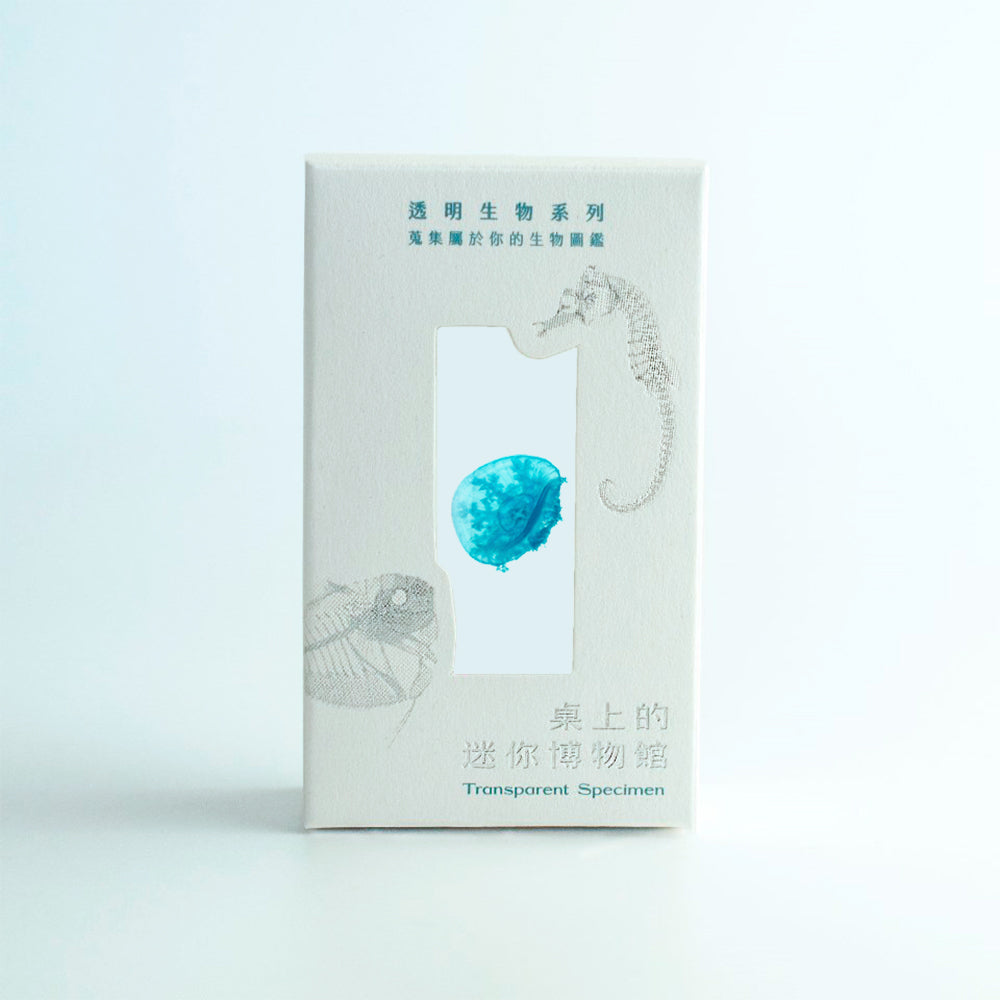
【A Mini Museum on Your Desk】 Transparent specimens showcase the unique skeletal structures of organisms. Through staining techniques, red-dyed hard bone and blue-dyed cartilage become clearly visible. Perfect for a desk or bookshelf, these specimens are crafted from discarded or naturally deceased animals, creating a unique collection that blends scientific education with aesthetic craftsmanship.
Biological Encyclopedia
The Upside-down jellyfish, Cassiopea andromeda, belongs to the order Rhizostomeae, though it is often difficult to distinguish between species by appearance alone. Jellyfish anatomy includes the bell, manubrium, gastrovascular cavity, marginal tentacles, and germ layers. However, members of the order Rhizostomeae may have marginal lappets on the bell rim, but they lack marginal tentacles. The tentacles typically found under the bell are actually oral arms connected to the mouth; these oral arms possess nematocysts used for hunting. In the Upside-down jellyfish, the bases of the oral arms are fused, and the ends feature suctorial mouths with folded oral lips.
The Upside-down jellyfish hosts symbiotic zooxanthellae, which perform photosynthesis to provide energy to the jellyfish. However, the jellyfish does not rely solely on photosynthesis for nutrition; it can also use its oral arms to capture passing organisms.
Jellyfish populations occasionally swarm in certain marine areas. This can be caused by seawater pollution, which creates conditions suitable for reproduction, or a decrease in natural predators such as sea turtles, ocean sunfish, or other jellyfish. Upside-down jellyfish do not swim often, preferring to rest with their bells downward in shallow, sunny, and calm waters. They are commonly found in lagoons with sandy bottoms or seagrass beds.
//Product Features//
See With Us, Sea With Us
Kairu EcoArt handcrafts transparent specimens (Diaphonization) for our "Mini Museum on Your Desk" series. Each specimen in its glass bottle is a one-of-a-kind collectible. The preserving fluid is safe and non-toxic, allowing for permanent display. Let's collect your own biological encyclopedia together!
How does Kairu turn fish transparent?
Transparent specimen preparation is a scientific technique initially developed for research. Kairu utilizes specimens sourced from discarded fishing catches, invasive species, or organisms that died at breeding farms. Without compromising the integrity of the organism, the remains undergo treatment with multiple chemicals and dyes, transforming what was once lost into a stunning, unique, and transparent work of art.
DIY Kairu’s Marine Lab Series: Transparent Specimen Kit
//Product Specifications//
//Contents//
Transparent Biological Specimen
High-Clarity Glass Bottle
Glycerin
Display Gift Box
Classic Biological Information Card
Product Warranty Card
//Container Dimensions//
15 ml screw-cap glass bottle: 7 cm height, 2.1 cm diameter
60 ml screw-cap glass bottle: 14 cm height, 2.7 cm diameter
Designed by Kairu EcoArt / Made in Taiwan
//Precautions//
>This product is a biological specimen made from deceased organisms, primarily sourced from discarded fishing catches or natural causes.
>For display or educational purposes only. Do not consume and avoid excessive handling.
>As these are genuine biological specimens, photos are for reference only. Minor imperfections (such as incomplete fins) are normal.
>It is recommended to store the product in a cool place away from direct sunlight.
>The preserving fluid, glycerin, is non-toxic. If contact occurs, simply rinse with water.
>The specimen is preserved in glycerin; any air bubbles present can be used to adjust the specimen's position.
>Handcrafted specimens may vary in color; photos are for reference only. If you have specific color requirements, please contact us before placing your order.