


KAIRU ECO-ART STUDIO
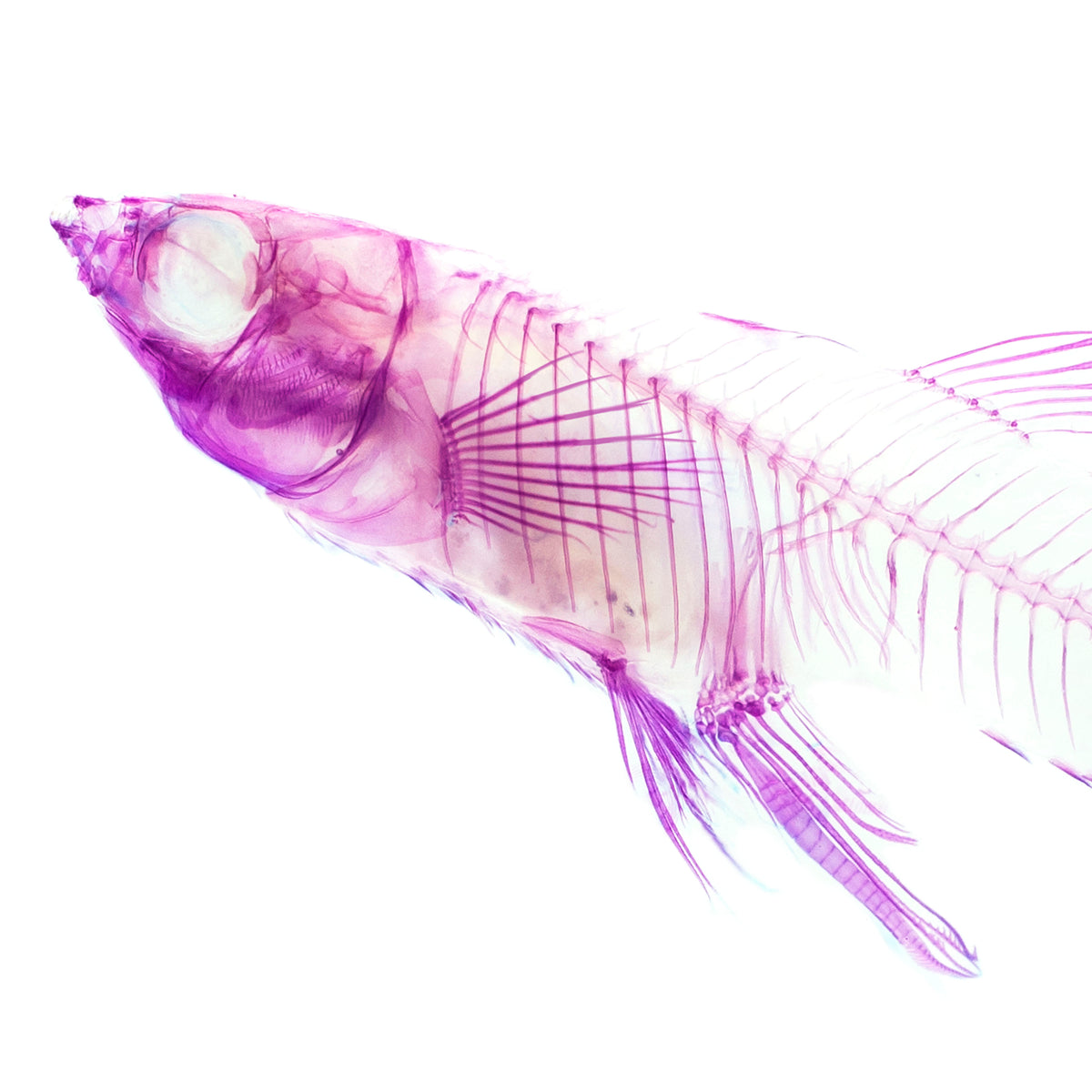
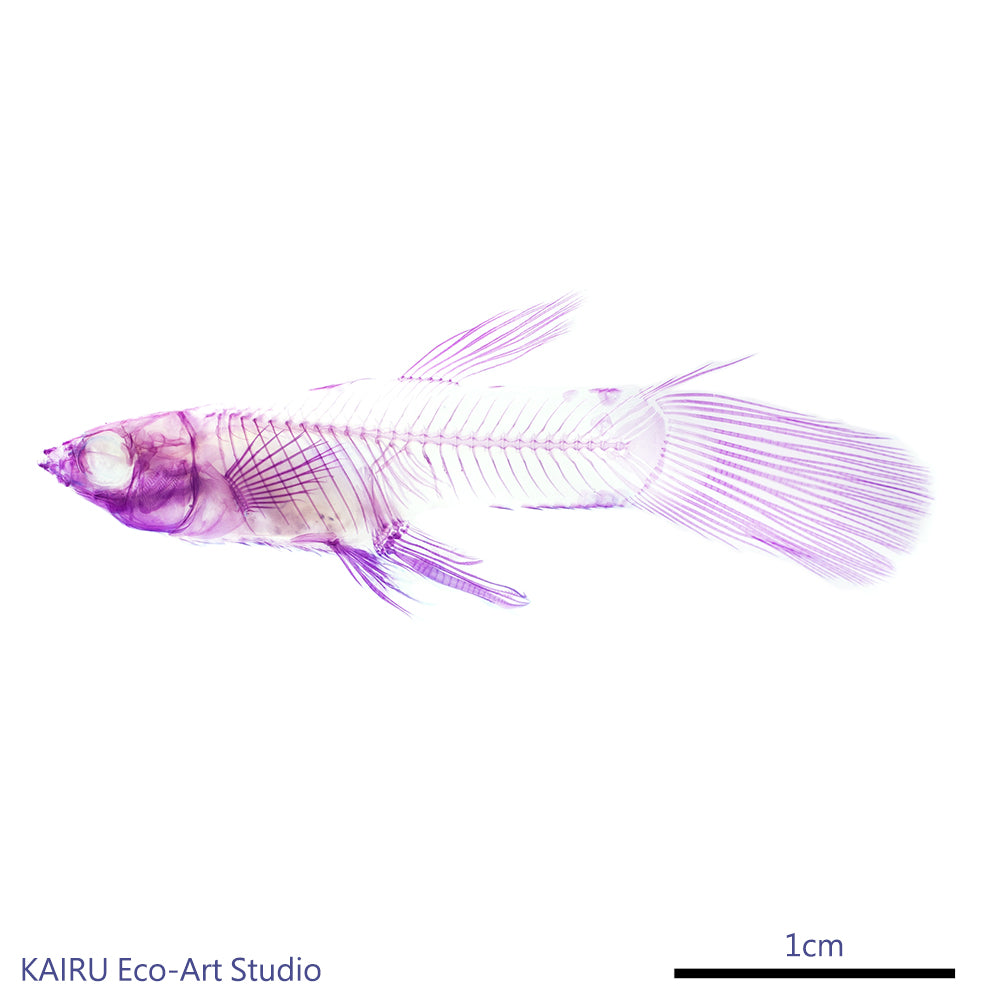
Guppy (Poecilia sp.) Transparent Specimen Series_104_A Mini Museum on the Desk
Guppy (Poecilia sp.) Transparent Specimen Series_104_A Mini Museum on the Desk
Couldn't load pickup availability



Biological Encyclopedia
Guppies (Poecilia sp.) belong to the family Poeciliidae. In terms of appearance, they have elongated bodies that are wedge-shaped in the front and laterally compressed toward the back. Females have larger, more distended abdomens compared to males. They possess upward-facing, retractable mouths, and a short dorsal fin located on the posterior half of the body. The difference between guppies and mosquitofish lies in the position of the dorsal fin: on a guppy, the base of the dorsal fin is further from the base of the caudal fin. Furthermore, males have larger caudal fins. Due to years of selective breeding, the caudal fin shape and body color of guppies vary significantly. Females are generally less vibrant than males and have smaller caudal fin structures. Additional features for identification include tooth shape, snout extension, and the structure of the gonopodium.
Guppies are small fish inhabiting freshwater or brackish areas. They exhibit high reproductive rates and strong environmental tolerance. Due to human introduction, abandonment, or escapes, they have become an invasive species found in freshwater habitats throughout Taiwan. Because of their high reproductive success, they overlap with the ecological niche of the native medaka (rice fish). Coupled with environmental pollution and habitat destruction, this has led to the displacement of native medaka by Poeciliidae species such as the mosquitofish or guppies.
//Product Features//

See With Us, Sea With Us
Kairu Studio creates handmade transparent specimens (diaphonization), forming a series of "mini-museums for your desktop." Each specimen in its glass bottle is a one-of-a-kind collectible. The preservation fluid is safe and non-toxic, allowing the specimens to be kept permanently. Let’s collect your own biological field guide!
 How does Kairu turn fish transparent?
Transparent biological specimen preparation is a scientific method initially used for research. The specimens used by Kairu are sourced from fish waste, invasive species, or organisms that died in aquaculture facilities. Through a multi-stage chemical and staining process—without destroying the integrity of the biological body—the remains of these creatures are reborn as exquisite and unique transparent specimens.
DIY Handmade Kairu’s Marine Lab Series: Transparent Specimen Kit
//Product Specifications//


//Contents//
Transparent biological specimen
High-definition glass bottle
Glycerin
Display box
Classic species information card
Product warranty card
//Container Dimensions//
15 ml screw-cap glass bottle, 7 cm height, 2.1 cm diameter
Designed by Kairu Studio / Made in Taiwan
//Notes//
> This product is a biological specimen made from organisms that have already died. Sources are primarily waste from fisheries or animals that died of natural causes.
> For display or educational purposes only; do not consume, and handling is not recommended.
> As these are real biological specimens, photos are for reference only. Minor imperfections (such as incomplete fins) are normal.
> It is recommended to store in a cool place away from direct sunlight.
> The preservation fluid (glycerin) is non-toxic. If it comes into contact with skin, simply rinse with water.
> The specimens are stored in glycerin; the air bubbles present can be used to adjust the pose of the specimen.
> Due to the handmade nature of these specimens, there may be color variations. Photos are for reference only. If you have specific color requirements, please contact us before placing your order.