


KAIRU ECO-ART STUDIO
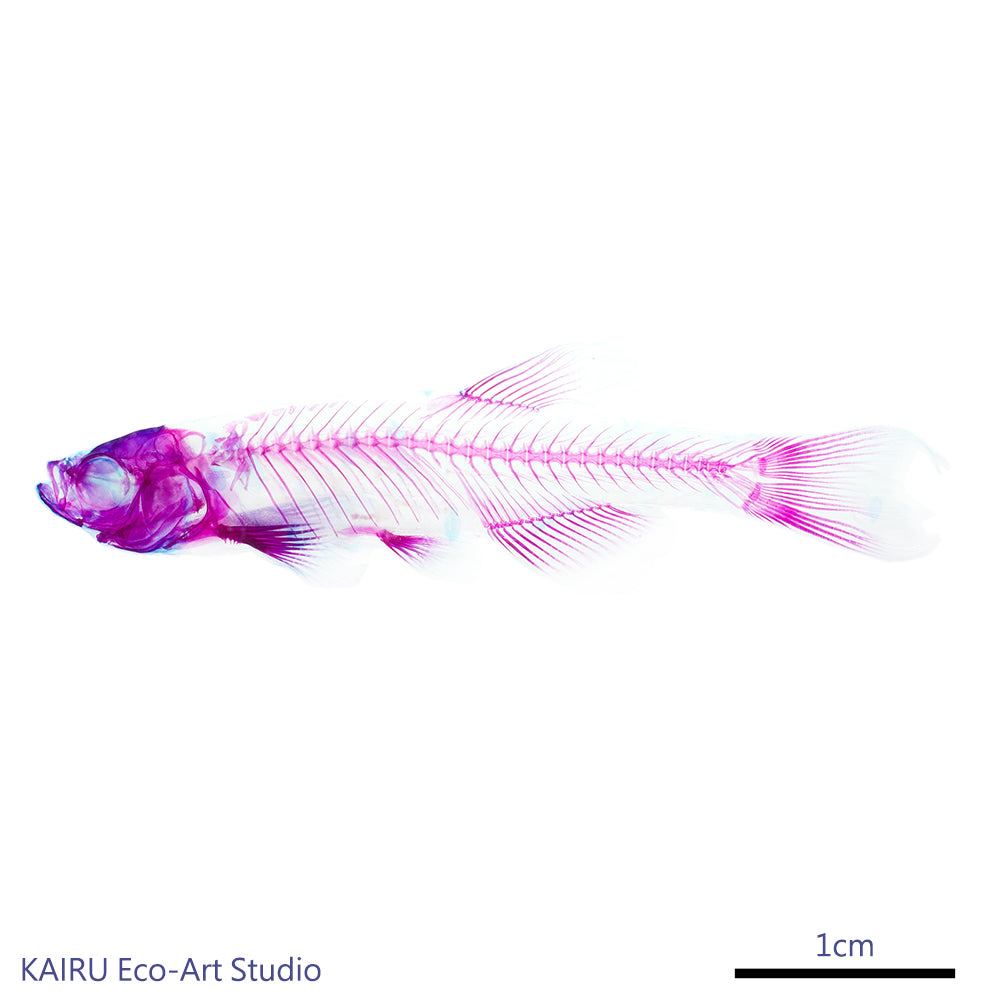
Zebrafish (Danio sp.) Transparent Specimen Series_101_Miniature Museum on the Desk
Zebrafish (Danio sp.) Transparent Specimen Series_101_Miniature Museum on the Desk
Couldn't load pickup availability




Biological Encyclopedia
Zebrafish belong to a group within the Cyprinidae family. They have small, elongated, spindle-shaped bodies. To identify them, one can observe the mandible at the snout and the relative position of the fins; males possess a protrusion at the front of the anal fin.
Zebrafish are native to freshwater streams, ponds, or artificial water bodies in the southern part of the East Asian continent. They are omnivorous, feeding primarily on insects and small crustaceans, and typically swim in shoals.
In modern times, zebrafish are widely used as model organisms for research in genetics and human diseases (commonly the species *Danio rerio*). Their advantages include ease of care, transparent embryos that are easy to observe, and a fully sequenced genome.
// Product Features //

See With Us, Sea With Us
Kairu Studio handcrafts these transparent specimens (diaphonization), creating a "miniature museum on your desk." Each specimen in its glass vial is a unique collectible. The preserving fluid is safe and non-toxic, and the specimens are permanently preserved. Come build your own biological collection!

How does Kairu make fish transparent?
Transparent biological specimen preparation is a technique originally used for scientific research. Kairu sources specimens from discarded fish, invasive species, or organisms that have died in farms. Without damaging the integrity of the biological body, the specimens undergo treatment with multiple chemicals and dyes, allowing the remains of these fading lives to be reborn as beautiful, one-of-a-kind transparent specimens.
DIY Kairu’s Marine Lab Series: Transparent Specimen Kit
// Product Specifications //


// Contents //
Transparent biological specimen
High-clarity glass vial
Glycerin
Display box
Classic biological information card
Product warranty card
// Container Dimensions //
5 ml screw-cap glass vial; height 4 cm, diameter 2.1 cm
Designed by Kairu Studio / Made in Taiwan
// Important Notes //
> This product is a biological specimen made from organisms that have died; they are sourced primarily from discarded fish or organisms that died naturally.
> For display or educational purposes only; do not consume and avoid handling.
> These are real biological specimens; photos are for reference only. Minor imperfections (such as incomplete fins) are normal.
> We recommend storing in a cool place away from direct sunlight.
> The preserving fluid (glycerin) is non-toxic; if it comes into contact with skin, simply rinse with water.
> Specimens are preserved in glycerin; any air bubbles present can be used to adjust the specimen's position.
> Handcrafted specimens will have slight color variations; photos are for reference. If you have specific color requirements, please contact us before placing your order.