

KAIRU ECO-ART STUDIO
House Mouse (Mus musculus) Transparent Specimen Series_070 Mini Museum on the Table
House Mouse (Mus musculus) Transparent Specimen Series_070 Mini Museum on the Table
Couldn't load pickup availability

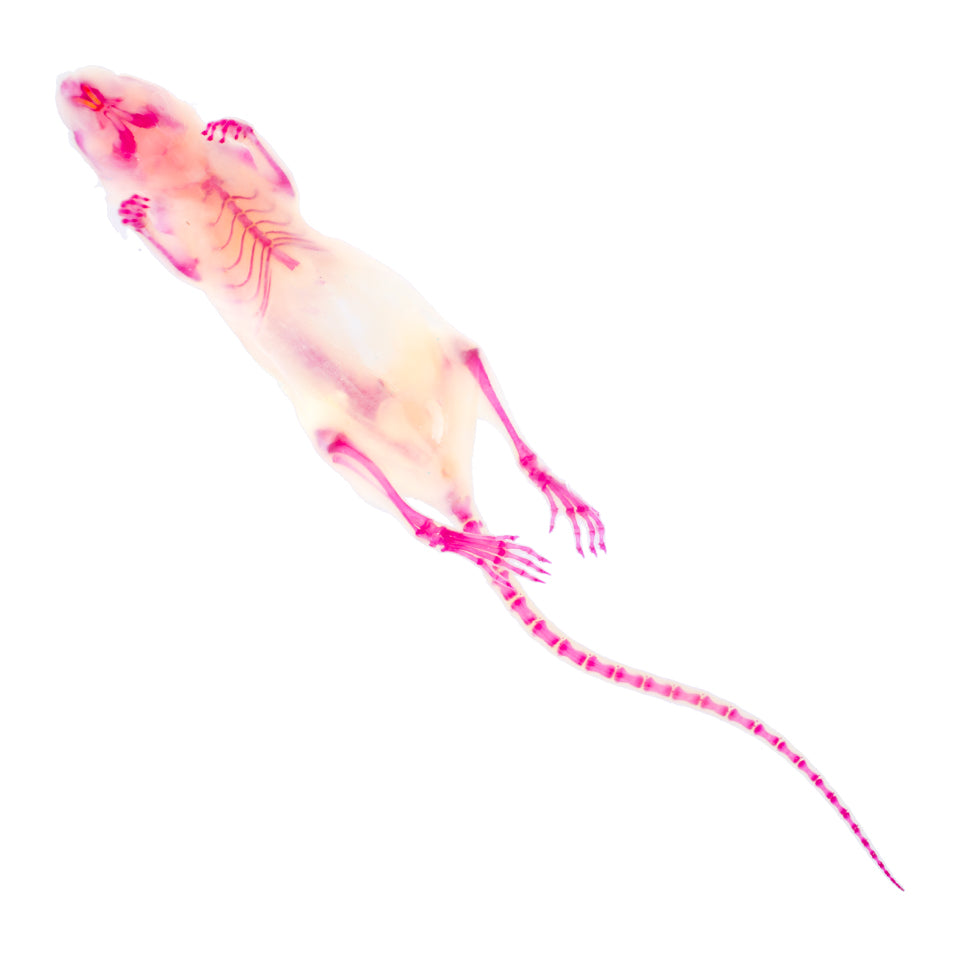
【A Mini Museum on Your Desk】 Transparent specimens reveal the unique skeletal structures of organisms; through staining techniques, red ossified bone and blue cartilage become clearly visible. Perfect for a desk or bookshelf, these specimens are created from discarded or naturally deceased creatures, making them a unique collection that blends scientific education with aesthetic craftsmanship.
Biological Encyclopedia
House Mouse Mus musculus
//Product Features//
See With Us, Sea With Us
Handcrafted by Kairu EcoArt, our transparent specimens (Diaphonization) are part of the "Mini Museum on Your Desk" series. Each specimen in its glass vial is a one-of-a-kind collectible. The preserving fluid is safe and non-toxic, allowing for permanent preservation. Start collecting your own biological field guide today!
How does Kairu turn creatures transparent?
Transparent biological specimen preparation was originally developed for scientific research. Kairu sources specimens from discarded fishery catches, invasive species, or animals that have died in aquaculture. Through a delicate process involving multiple reagents and dyes, we preserve the integrity of the organisms, allowing their remains to be reborn as stunning, unique transparent specimens.
DIY Kairu’s Marine Lab Series: Transparent Specimen Kit
//Product Specifications//
//Contents//
Transparent biological specimen
High-clarity glass vial
Glycerin
Display box
Classic species information card
Product warranty card
//Container Dimensions//
5 ml screw-cap glass vial: 4 cm high, 2.1 cm diameter
15 ml screw-cap glass vial: 7 cm high, 2.1 cm diameter
60 ml screw-cap glass vial: 14 cm high, 2.7 cm diameter
Designed by Kairu EcoArt / Made in Taiwan
//Important Notes//
> This product is a biological specimen made from deceased creatures, primarily sourced from discarded fishery catches or natural deaths.
> For display or educational purposes only; do not consume or handle roughly.
> As these are real biological specimens, photos are for reference only. Minor imperfections (such as incomplete fins) are normal.
> We recommend storing in a cool place away from direct sunlight.
> The preserving fluid, glycerin, is non-toxic. If contact occurs, simply rinse with water.
> Specimens are suspended in glycerin; bubbles may be present and can be used to adjust the specimen's position.
> Each handmade specimen may have slight color variations. Photos are for reference; if you have specific color requirements, please contact us before placing your order.